Product Parameters-AA Indian Mackerel


Product Details
AA Indian Mackerel
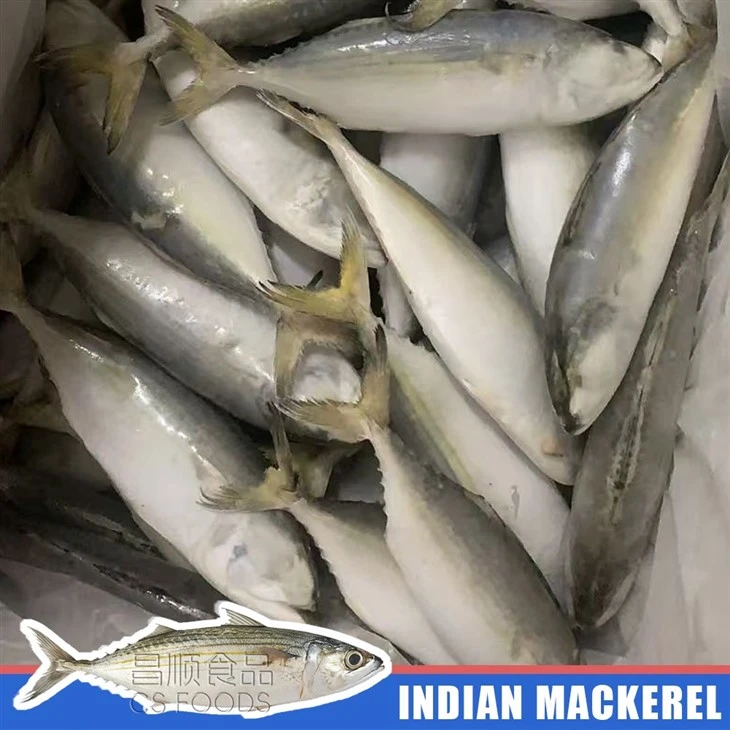
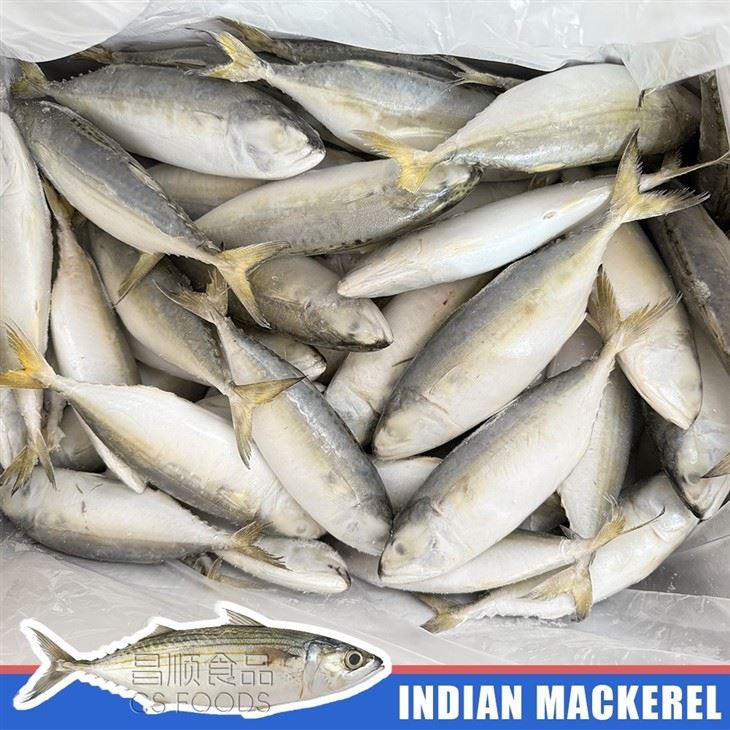
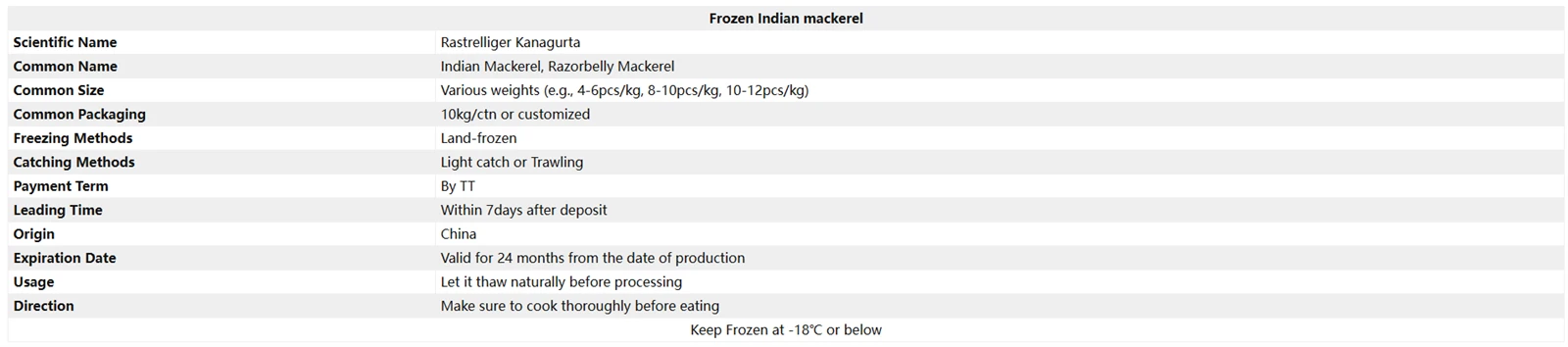
In seafood commerce, frozen Indian mackerel-baimianyu in Mandarin and Rastrelliger kanagurta scientifically-carries two identities. Locally, it is also referred to as "White Surface Fish" or "White Handle"; on the global stage, it is known as Indian Mackerel or Razorbelly Mackerel and belongs to the Scombridae family, which also encompasses tuna and bonito.
The fish exemplifies a small pelagic species with substantial landings and considerable market worth. A warm-water, fast-moving species widely distributed across the Indo-Pacific, it supports capture fisheries in the East China Sea and adjacent areas. With the traditional "big four" stocks-yellow croaker among them-showing decline, this mackerel, sold locally as "White Surface Fish," became a major commercial target, appreciated for its rich taste as well as its affordability and wide availability.
Video Description
Our Advantages

Certifications

Our Company

Packaging

Distinctive Characteristics
- A Fish That Embodied an Economic Shift
The Indian mackerel illustrates a notable turning point in contemporary fisheries. As bigger conventional table fish grew less available owing to fishing pressure and shifting marine environments, the healthy and adaptable stocks of Indian mackerel turned into a vital pillar for both nutritional supply and the fishing sector. Its capacity to support sustained heavy catches enabled seaside communities and business fishers to keep product flowing while favored species were in retreat. In this way, the fish helped narrow the divide between longstanding harvesting practices and the new production landscape, reinforcing its role as a staple in local diets and regional commerce.
- Eye-Catching Camouflage Coloration
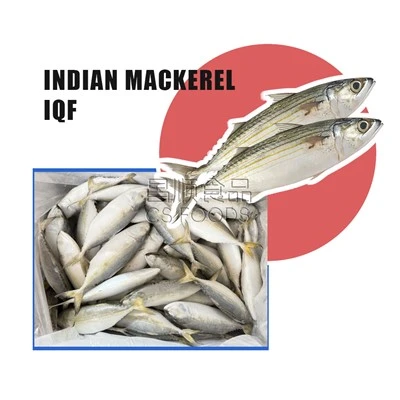
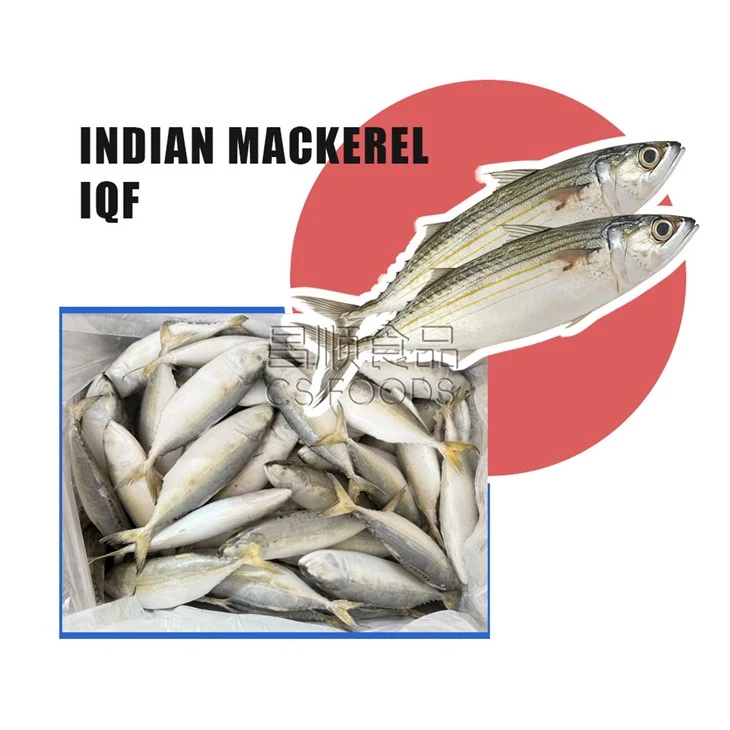
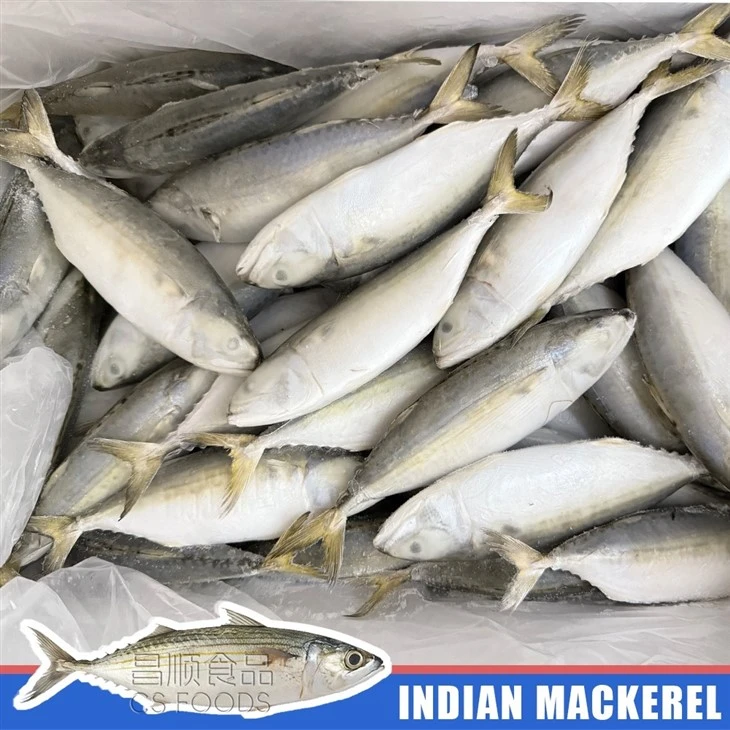
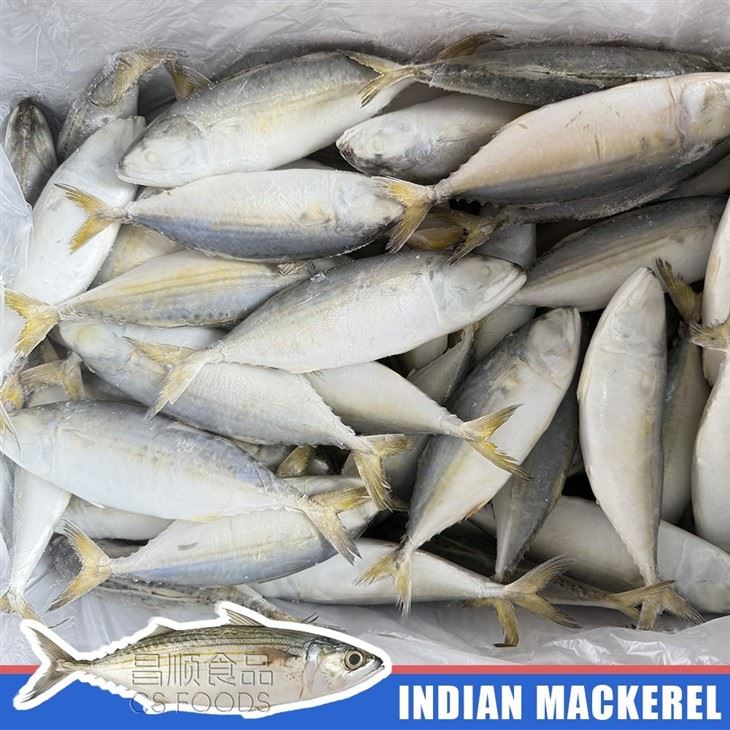
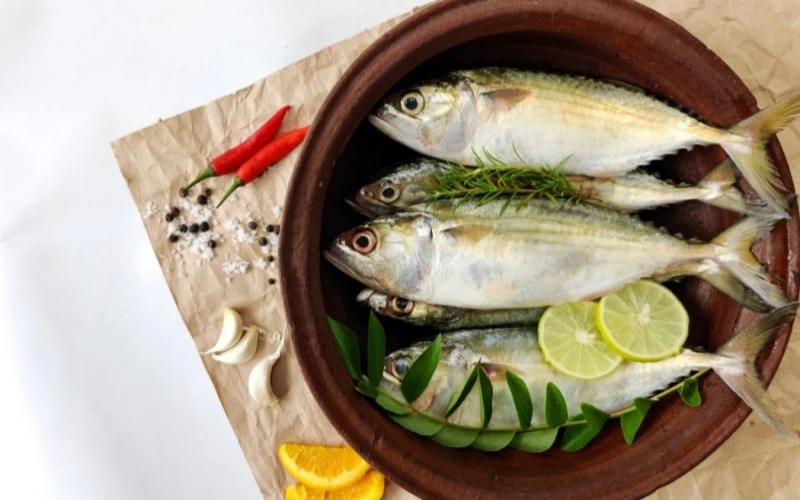
Frozen Indian mackerel has a recognizable and attractive look that helps it stand out in trade. It features a sturdy, somewhat compressed, fusiform body covered with fine, sleek scales. The dorsal area is dark blue-black, marked by irregular wavy dark-blue patterns that produce a natural concealment effect. By contrast, the ventral side is white with a yellowish tinge-likely the origin of its local "white surface" label. This coloration serves practical roles as well: it aids species recognition and quality checks, and it gives the fish a look that purchasers link to freshness and genuine species identity.
- Built for Swift Movement
With a pointed head, big eyes protected by an adipose lid, and a strong bifurcated tail, the Indian mackerel is adapted to pelagic life. These features enable sustained movement and let the fish travel constantly in sizable shoals, often over long distances in search of prey and suitable water conditions. Its fusiform shape lowers resistance, while the bifurcated tail supplies propulsion and agility. This mobile shoaling habit shapes fishing techniques, landing logistics, and handling needs, making the species a good fit for large-scale capture yet requiring rapid chilling and freezing to protect quality.
- Predictable Seasonal Peaks
Supply shows clear seasonal highs, usually from February to May and again from July to August, matching its reproduction and feeding cycles. These high-supply periods influence buying plans, processing timetables, and export scheduling. Traders and processors often accumulate stock during abundant months to cover demand in slower periods, while price swings track the rhythm of landings. Grasping seasonality is therefore crucial for both buyers and sellers, since it influences supply continuity, size grades, and the competitive position of frozen Indian mackerel in global trade.
Hot Tags: aa indian mackerel, China aa indian mackerel manufacturers, suppliers, factory