

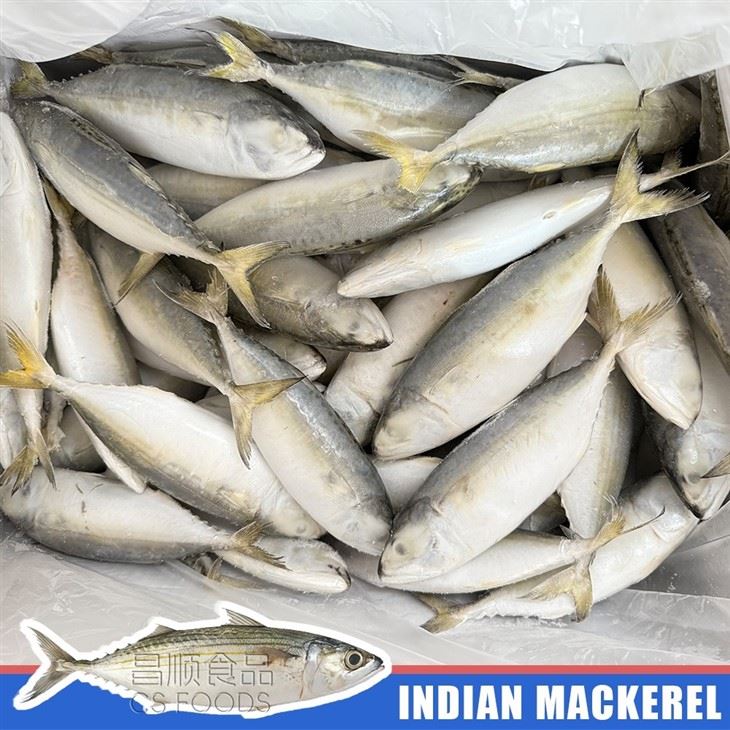
Product Parameters-AAA Indian Mackerel
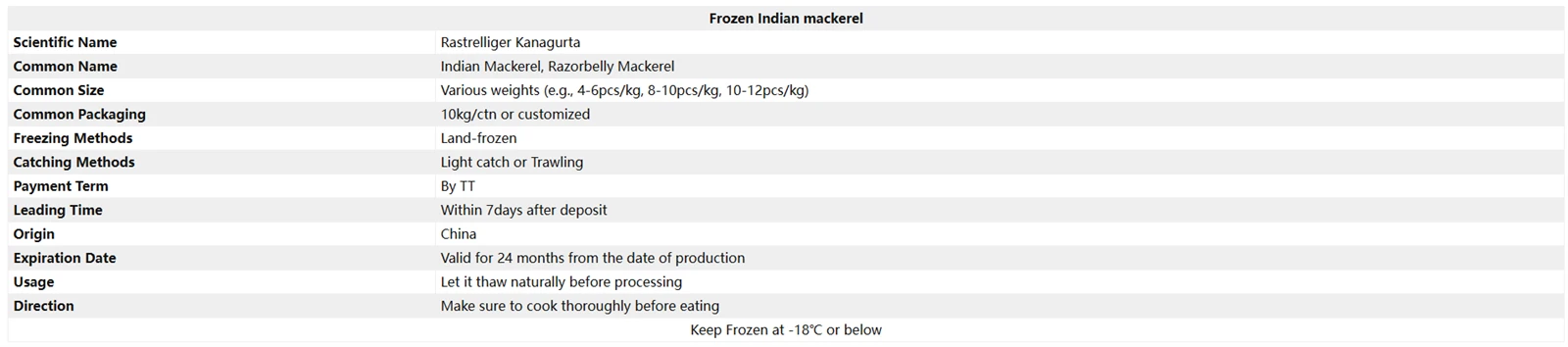


Product Details
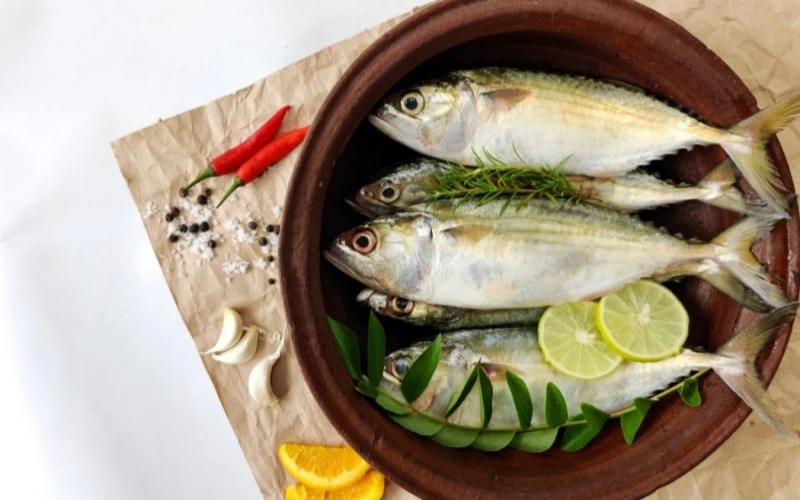
AAA Indian Mackerel
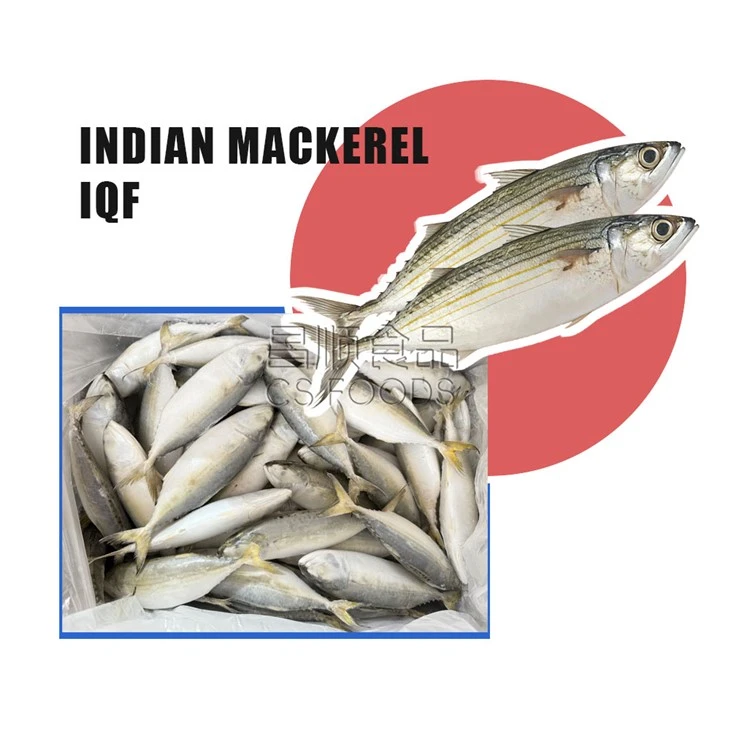
Frozen Indian mackerel-known in Mandarin as baimianyu and scientifically as Rastrelliger kanagurta-occupies a dual identity in the seafood trade. In local markets it may be called "White Surface Fish" or "White Handle," while internationally it is recognized as Indian Mackerel or Razorbelly Mackerel, a member of the Scombridae family that also includes tuna and bonito.
This species is a typical small pelagic fish combining large landing volumes with strong commercial value. A fast-swimming, warm-water fish distributed across the Indo-Pacific, it underpins fisheries in the East China Sea and surrounding waters. As catches of the traditional "big four" species-including yellow croaker-declined, the Indian Mackerel, marketed locally as "White Surface Fish," emerged as a key commercial species, valued for its full flavor and broad affordability and accessibility.
Video Description
Our Advantages

Certifications

Our Company

Packaging

Distinctive Characteristics
- The "Economic Transition" Fish
The Indian mackerel represents a significant shift in modern fisheries. As larger, more traditional food fish became increasingly scarce due to overfishing and changing ocean conditions, the robust and resilient populations of Indian mackerel made it a critical resource for both food security and the fishing industry. Its ability to sustain high-volume landings allowed coastal communities and commercial operators to maintain supply when other preferred species were declining. In this sense, the species helped bridge the gap between traditional capture patterns and the emerging realities of modern seafood production, cementing its status as a staple in local diets and regional trade.
- Striking Camouflage Livery
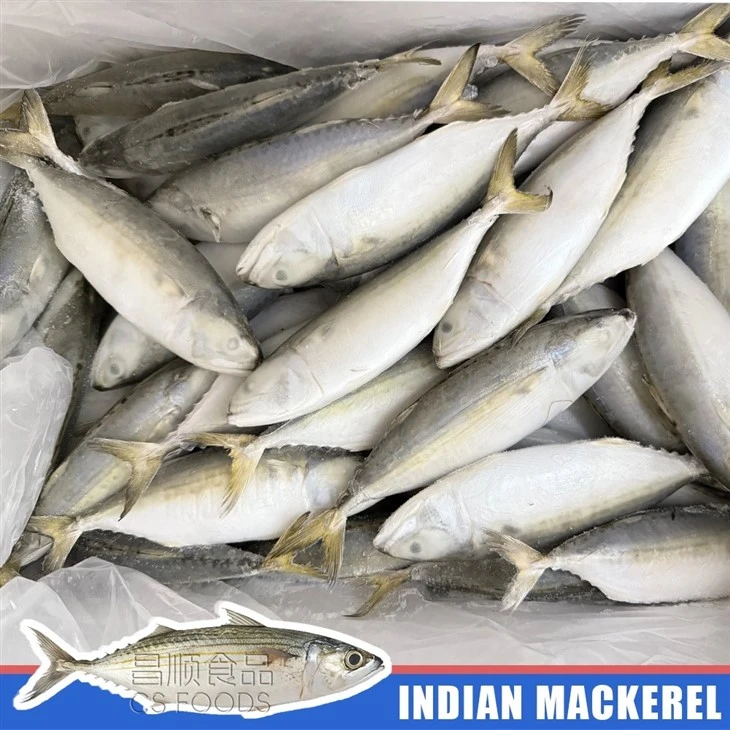
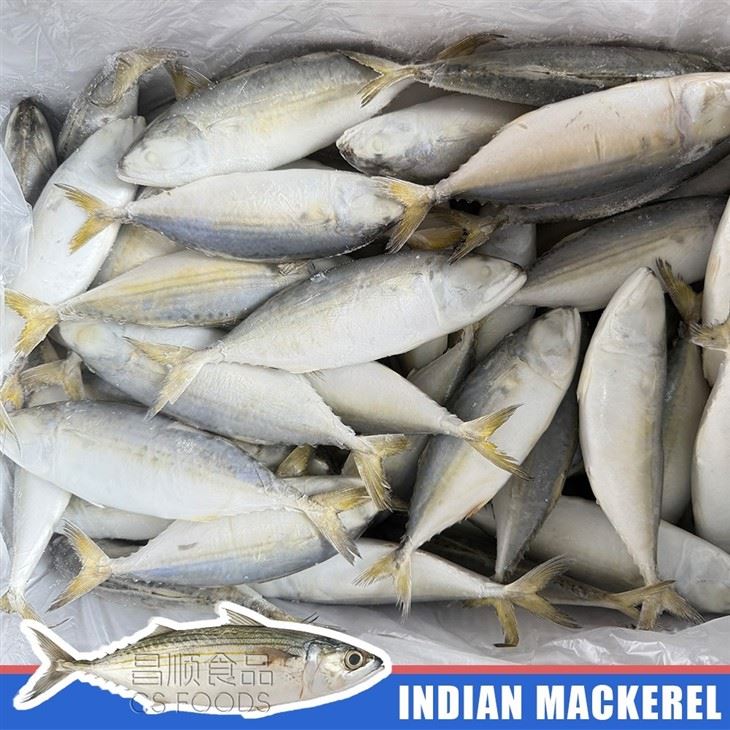
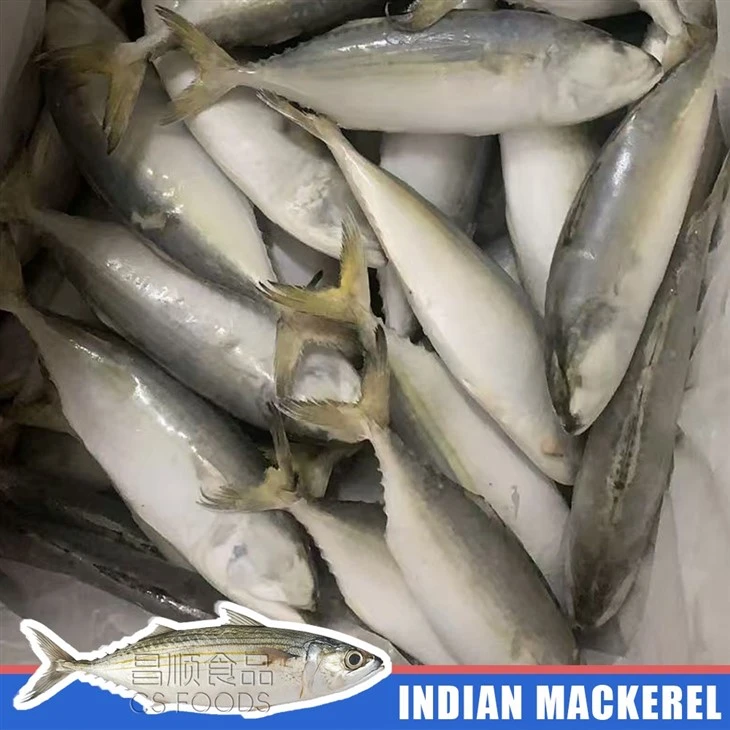
The frozen Indian mackerel has a distinct and visually appealing appearance that helps distinguish it in the marketplace. It boasts a robust, slightly flattened, spindle-shaped body covered in tiny, smooth scales. Its back is a deep bluish-black, adorned with irregular, dark blue wavy patterns that create a striking natural camouflage effect. In contrast, its belly is a clean white with a hint of yellow-a feature that likely contributes to its "white surface" name in local usage. This coloration is not merely aesthetic; it supports identification and quality assessment, and it gives the fish a recognizable appearance that buyers associate with freshness and species authenticity.
- Designed for Speed
With a conical head, large eyes covered by a fatty eyelid, and a powerful, forked tail, the Indian mackerel is built for life in the open ocean. These anatomical features support continuous swimming and allow the fish to move constantly in large schools, often covering considerable distances in search of food and favorable water conditions. Its streamlined, spindle-shaped body reduces drag, while the forked tail provides thrust and maneuverability. This active, schooling behavior influences capture methods, landing patterns, and handling requirements, making the species well suited to high-volume fisheries but also requiring efficient chilling and freezing to preserve quality.
- Seasonal Abundance
Its availability follows distinct seasonal peaks, typically from February to May and again from July to August, aligning with its spawning and feeding cycles. These windows of abundance shape procurement strategies, processing schedules, and export planning. Traders and processors often build inventory during peak periods to meet demand during leaner months, while price fluctuations reflect the rhythm of landings. Understanding these seasonal patterns is therefore essential for buyers and sellers alike, as it affects supply stability, product size grades, and the overall competitiveness of frozen Indian mackerel in international trade.
Hot Tags: aaa indian mackerel, China aaa indian mackerel manufacturers, suppliers, factory
