Insulated Packaging: The Most Overlooked Variable in Seafood Cold-Chain Performance

November 2026 | Industry Knowledge Briefing
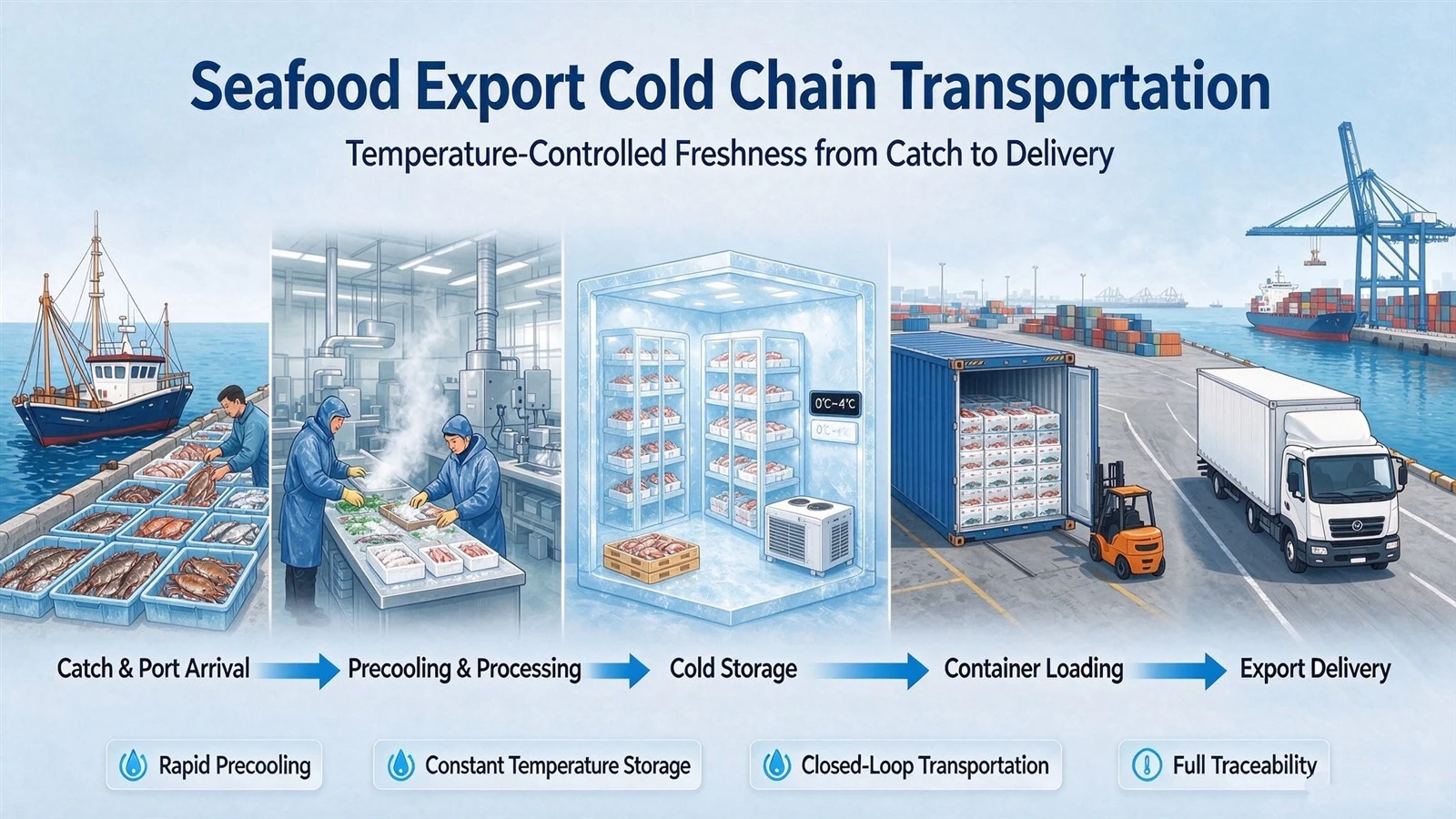
Seafood exporters tend to think about cold-chain control in terms of refrigeration equipment, container set-points, and temperature records. The packaging itself - the foam box or insulated liner that sits between the product and the ambient environment - is often treated as a commodity purchase, selected on unit price and wall thickness. That assumption is costly. A significant share of seafood cold-chain failures originates not at the reefer unit or the vessel, but inside the carton.
The Scale of the Exposure
FAO's 2026 assessment places global trade in aquatic animal products at a record USD 184 billion, with more than one-third of production crossing a border before consumption. FAO separately estimates that roughly 35% of the global harvest is lost or wasted annually. Temperature abuse and inadequate hygienic conditions rank among the main hazard categories flagged in border notification systems; in the EU's Rapid Alert System, poor temperature control was among the leading reported hazards for seafood over a multi-year period.
Three Failure Modes That Packaging Controls Directly
In-pack desiccation
Empty headspace inside a wrapper, combined with storage temperature fluctuation, can make the packaging material colder than the fish itself. Moisture migrates from the tissue and condenses as frost on the inner film. Gross weight remains unchanged, so routine weight checks miss the problem, while the product continues to dry and deteriorate. Even low-permeability materials cannot fully prevent this when conditions drive desiccation.
Thaw–refreeze cycling
Temperature fluctuation allows frozen product to thaw slightly and refreeze, forming large ice crystals that physically damage muscle tissue. The visible consequence is drip loss at destination - after the damage is already irreversible.
Shelf life consumed in transit
Storage life is a budget denominated in temperature. Cooked peeled shrimp holds roughly five months at −18°C, nine months at −24°C, and twelve months at −30°C. Packaging governs how fast heat reaches the product surface during every door opening, tarmac wait, and cross-dock - events that occur regardless of how well the container set-point is maintained.
Why ''Thicker'' Is Not a Specification

Expanded polystyrene (EPS) is widely used for chilled seafood because it is lightweight, water-resistant, and inexpensive. But its insulation efficiency is not guaranteed by the material category; it depends on design, density, and application conditions. Comparative testing has shown that appropriate insulation requirements are determined by specific transport conditions rather than by conventional packaging choices.
A related variable is moisture ingress. Once water penetrates the foam pores, it creates a thermal bridge that accelerates heat loss and degrades the box's effective insulation - a failure mode that is invisible at the point of packing. Closed-cell structure and proper sealing matter as much as nominal thickness.
Practical Verification for Exporters
Ask suppliers for performance data tied to worst-case ambient conditions, not laboratory averages. Verify headspace management inside primary packaging. Confirm that the insulation specification has been tested against the actual transit profile - duration, number of handovers, and expected ambient temperature range - rather than selected by habit. And treat packaging as a documented part of the cold-chain evidence chain, not a consumable.
For seafood exporters, packaging is the last physical barrier between a compliant product and a rejected shipment. It deserves the same scrutiny as the temperature record itself.
For more information about our seafood products and export capabilities, please contact our sales team.